James Rayo
Product Designer
Atlas Agent
Startup | SaaS | B2B
Reimagining how brokers manage their business
Brokers juggle hundreds of clients, deadlines, and documents at once. I sat down with them to understand and reimagine their workflow.
Introduction
A document management system for real estate agents to stay on top of their transaction progress.
Role
UX Designer, Researcher
Timeline
3 months
Deliverable
Launched Oct 2024
Objectives
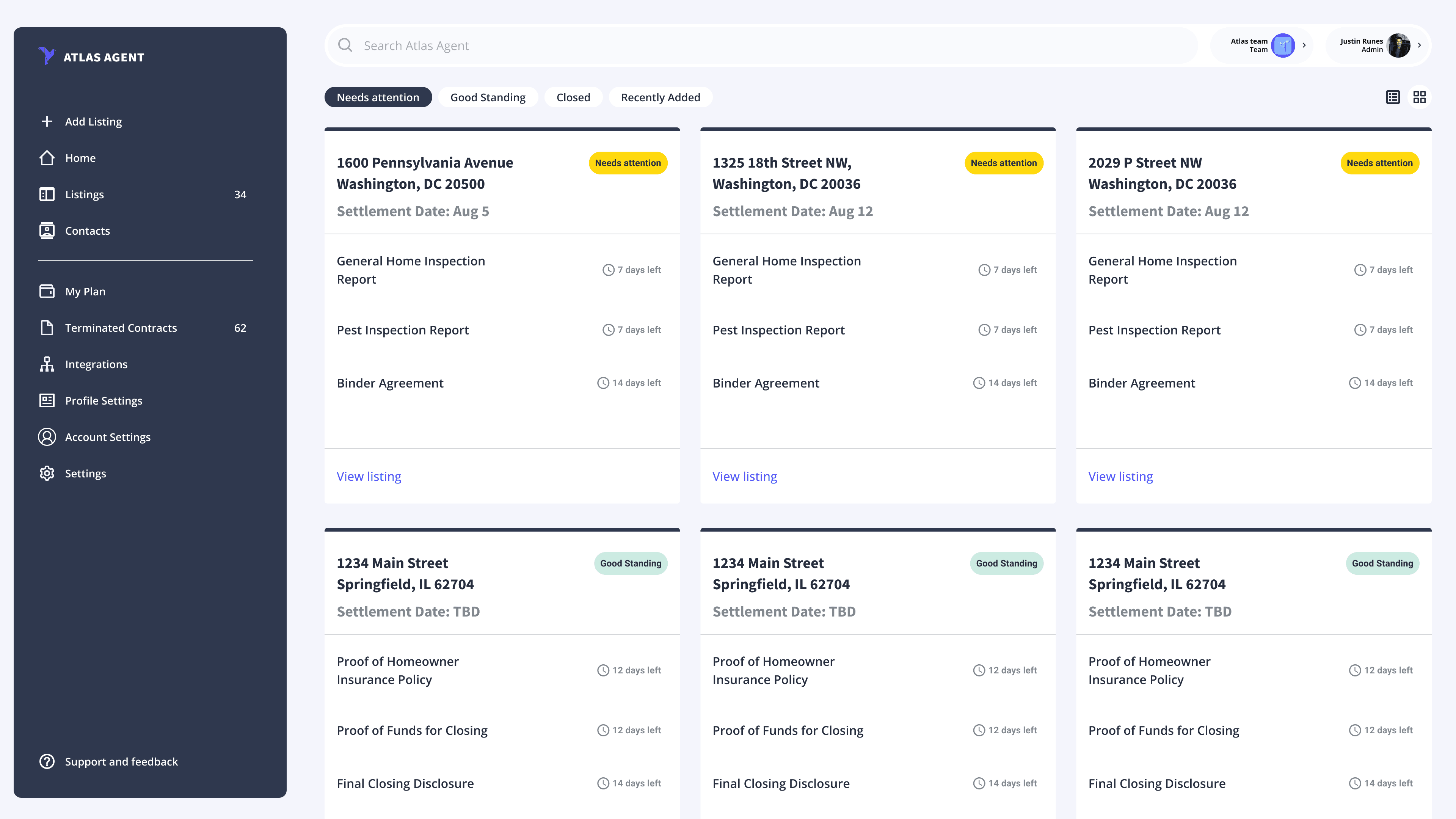
Create a dashboard that captures the essence of the product at a glance, without overwhelming agents.
How?
Using problem defining artifacts we created early on like personas, problem statements, MSCW, journey map and user flows to promote company wide alignment.


Our users
Who's having these problems?
In a real estate property transaction, there are Seller/Listing Agents, Sellers (of the property), Buying Agents, and Buyers (of the property). Our users are on the seller side.
How do we know?
We interviewed 10+ real estate agents who run their own brokerages. We summarized those insights into these personas to guide our design decisions.



What did we learn our goals were?
We have to keep agents from falling out of contract by staying on top of document deadlines with client-centered practices and scale.
Where does Atlas Agent come in?
Document management
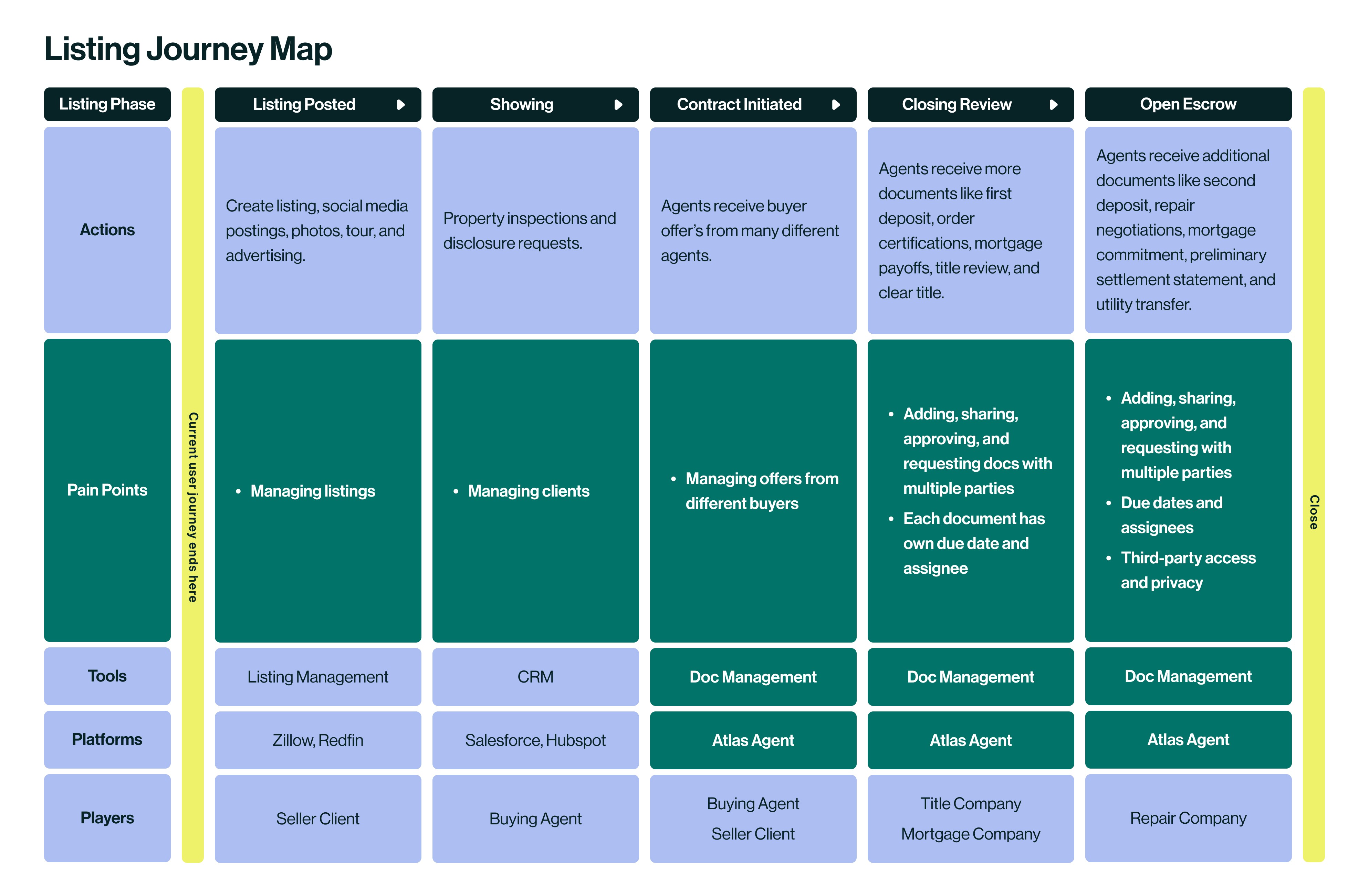
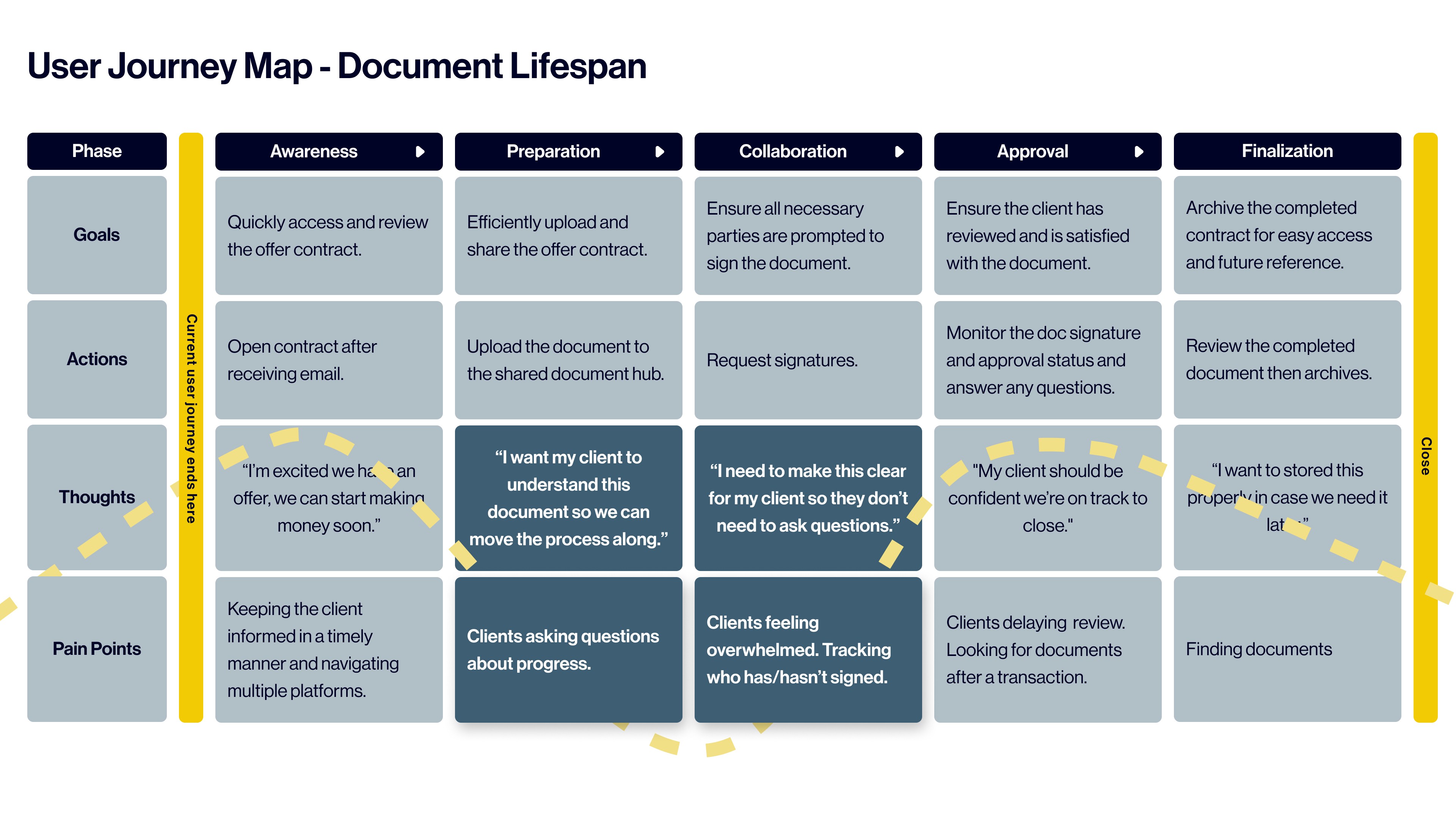
After interview agents, we needed to figure out where those pain points lay throughout the property listing transaction process. So I mapped out the lifespan of a listing to close and pointed out which points Atlas has the opportunity to address. We used this to inform design decisions as well as company alignment.
What is the worst part of managing docs?
Fielding client questions and missing deadlines
Client satisfaction is at the top of the list of priorities seller agents have. This user journey map finds the pain points agents experience in the document management process. With it, we can more narrowly decipher how our product can be the solution.
How did we figure out what to prioritize?
MSCW
We used the MSCW method (Must, Should, Could, Won't) to prioritize features during the design process. By categorizing key functionality into "Must-Have" essentials for document management, "Should-Have" features that enhance user experience, and "Could-Have" items for potential future development, we streamlined decision-making to meet both user needs and project constraints.
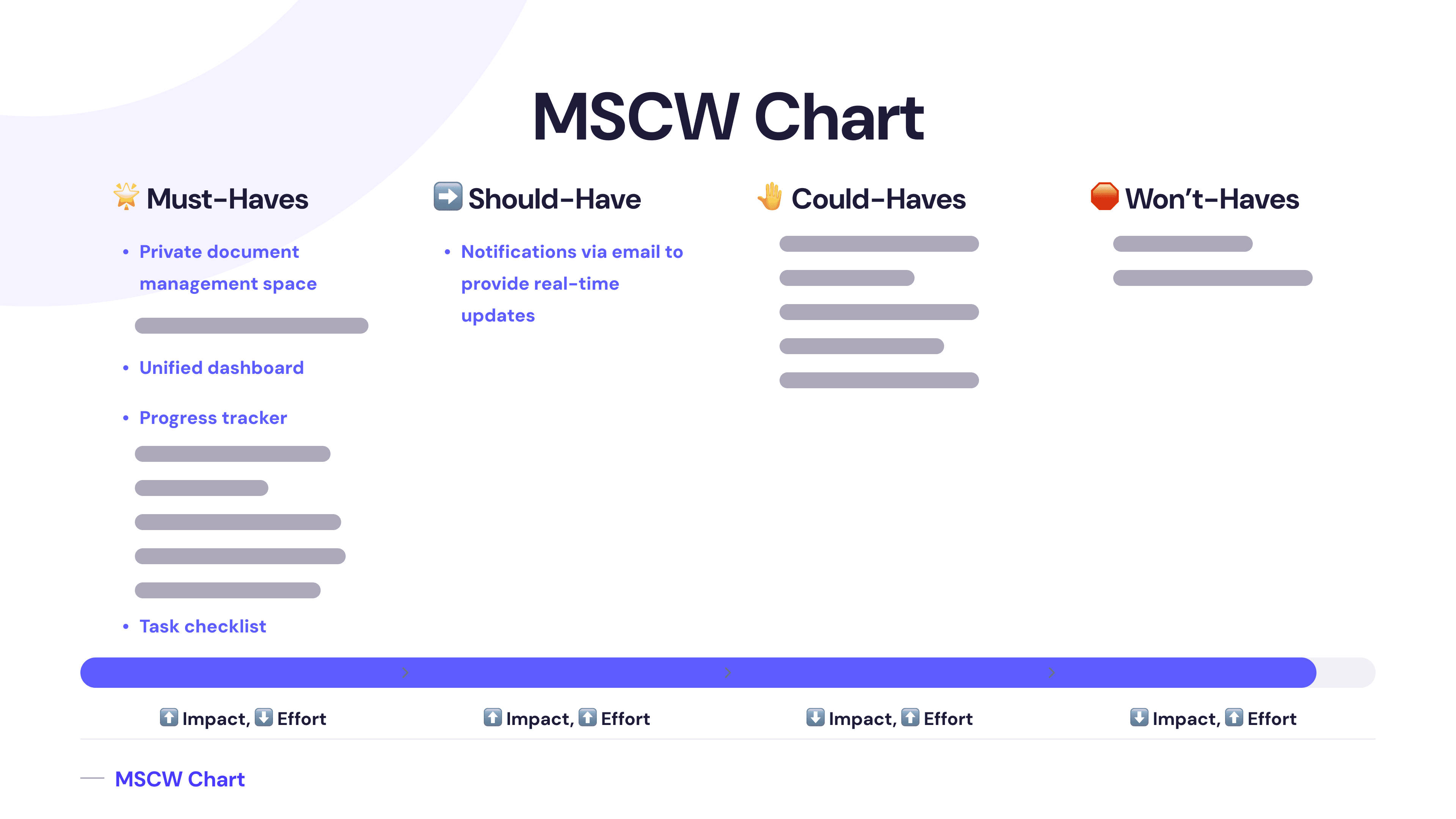
We chose to prioritize:
A space for agents to upload and exchange documents.
A way for agents to easily know what's needed next.
A dashboard that's easy to navigate through and scalable.
Who can we learn from?
Companies succeeding in document management
There are existing document management platforms, and we looked into how they gets users from point A to point B. We found that this comes from what information is given users up front and what type of affordances are given and when they are given.


Companies succeeding in tracking
These guys care about when things will be ready, where they're at in the process, and what's left to do. We can apply those things to document tracking.

How do we scale?
There are a ton of documents within a listing. At the same time, there are a ton of properties under a single agent. How can we scale this? Keep users informed on a per listing basis.
Agent dashboard
Before
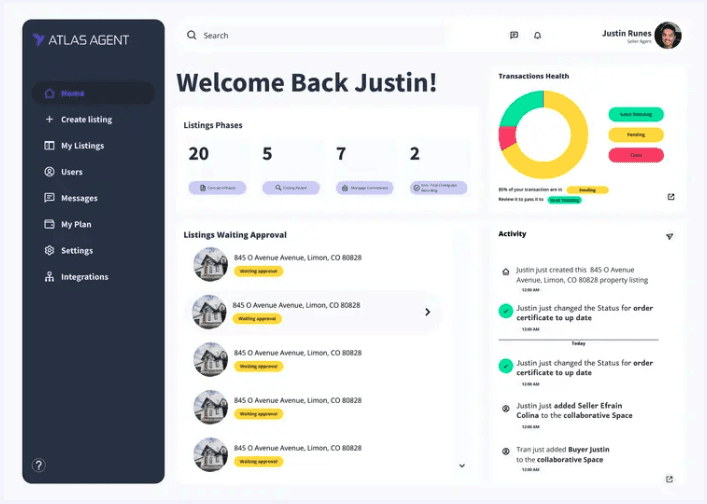
Areas to improve
Strengthen the call to action to guide users toward a clear next step.
Refine the color palette to better direct focus and reduce visual competition.
Make information more actionable so users know exactly what to do with it.
After
Solutions
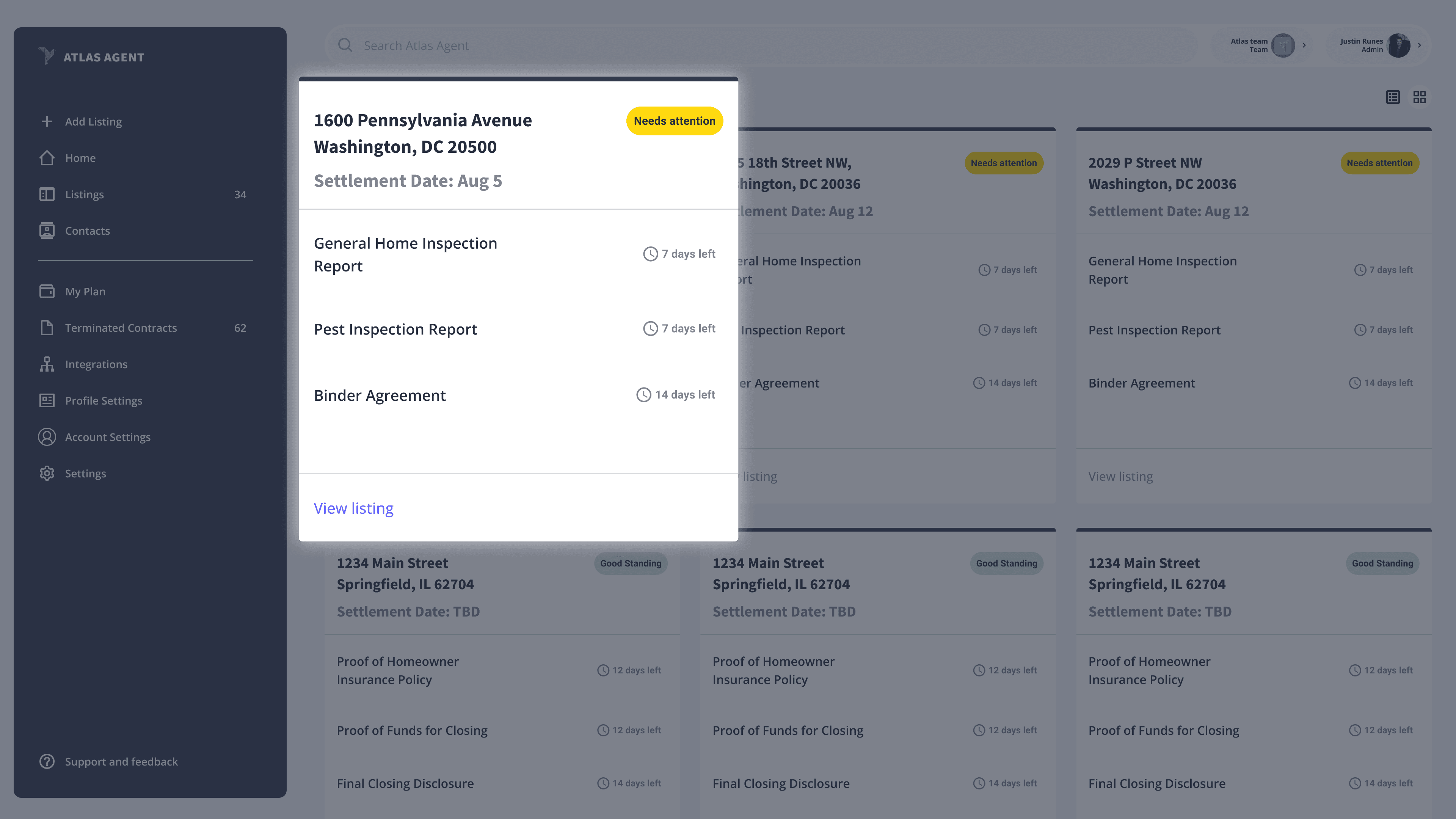
Surface urgent listings as individual cards for faster access to what needs action.
Color can be used intentionally to draw attention to items requiring action.
Due dates could be surfaced on cards to help users stay on top of deadlines.
Takeaway
The new dashboard is intentional, scalable, and easier to understand at a glance.
Document hub design
Tailored to the transaction process
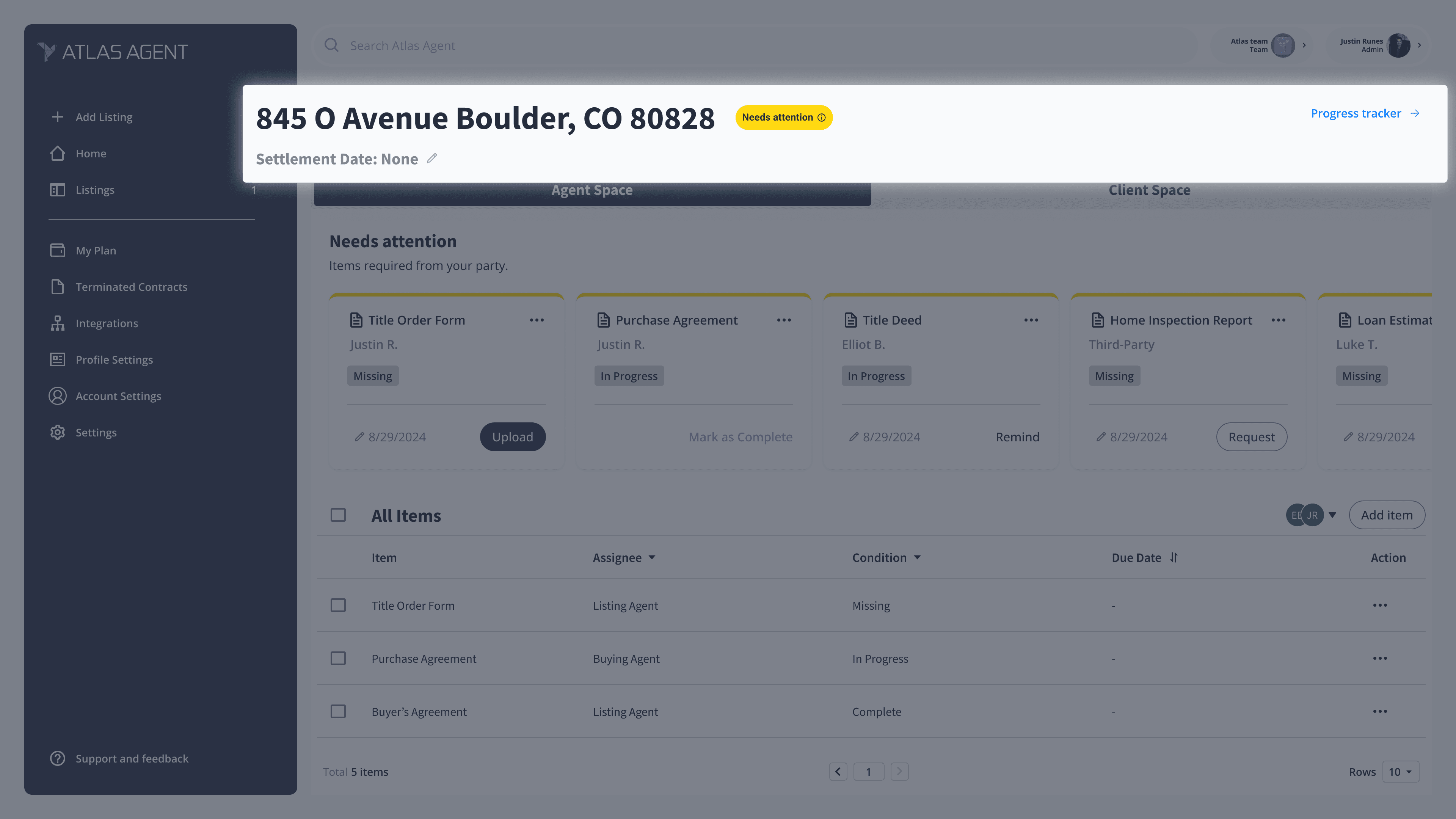
Once agents find a property listing they want to work on, they can go directly to that listing's document space where they can upload, view, and assign documents.
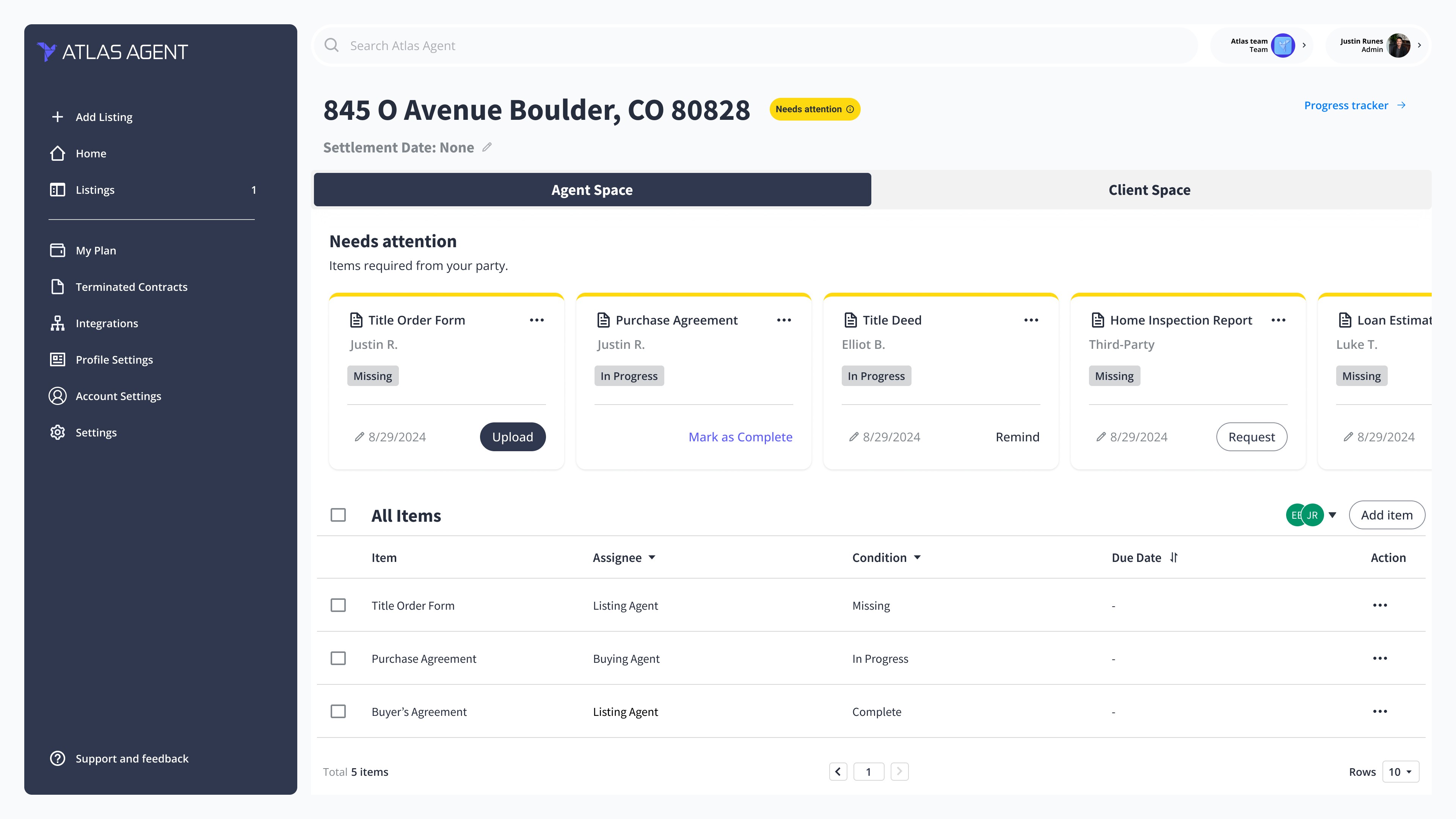
To-do list feature
Sometimes agents are responsible for certain documents, sometimes they're not. The to-do lists simplifies transactions by showing what documents are due, who they're due from, and providing affordance to act accordingly.
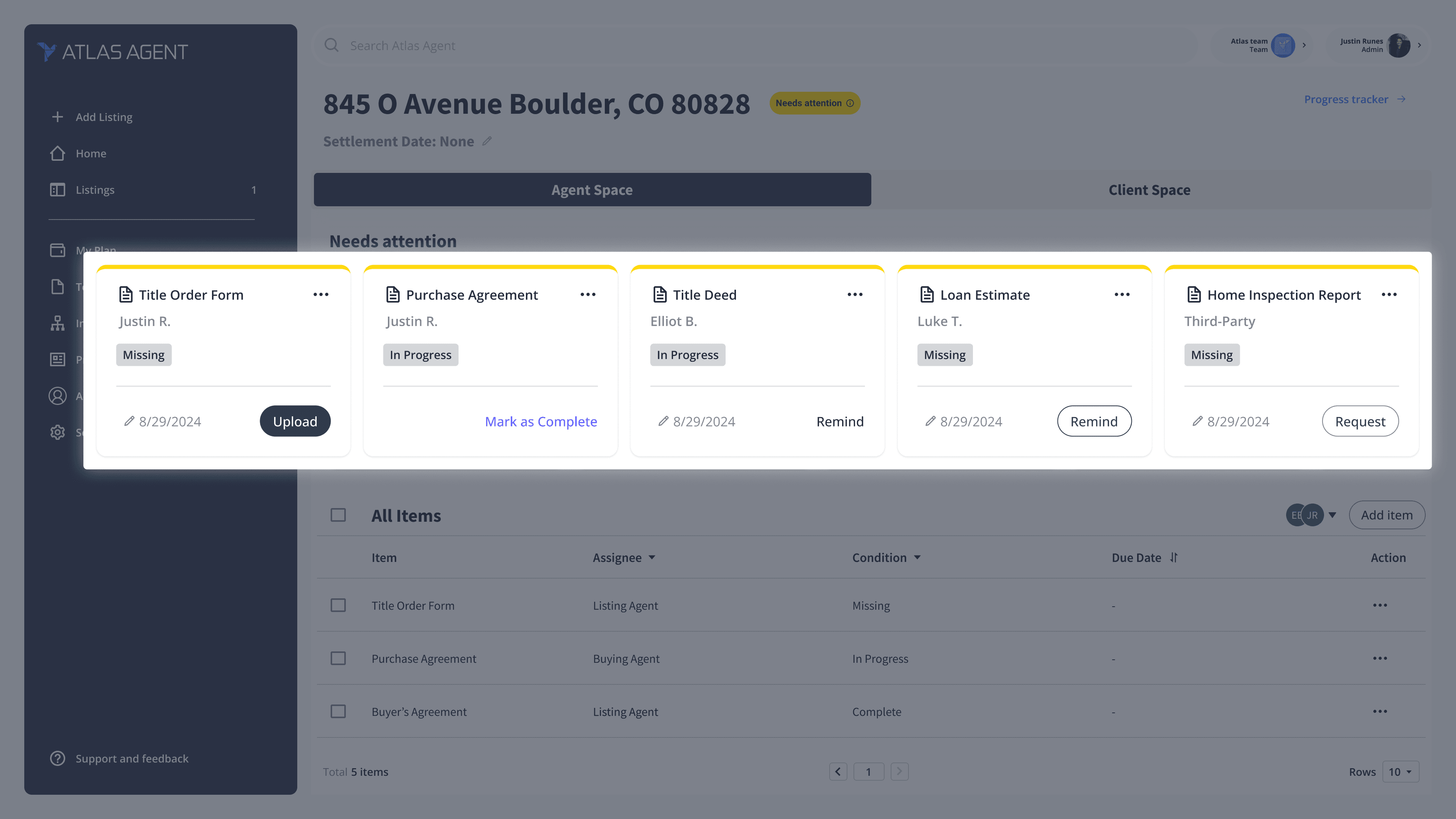
File management
Documents are displayed in data table format, allowing agents to see relevant information at a glance, filter through documents, see who has access to these documents for security purposes, add new documents, and conduct further action on individual documents as needed.
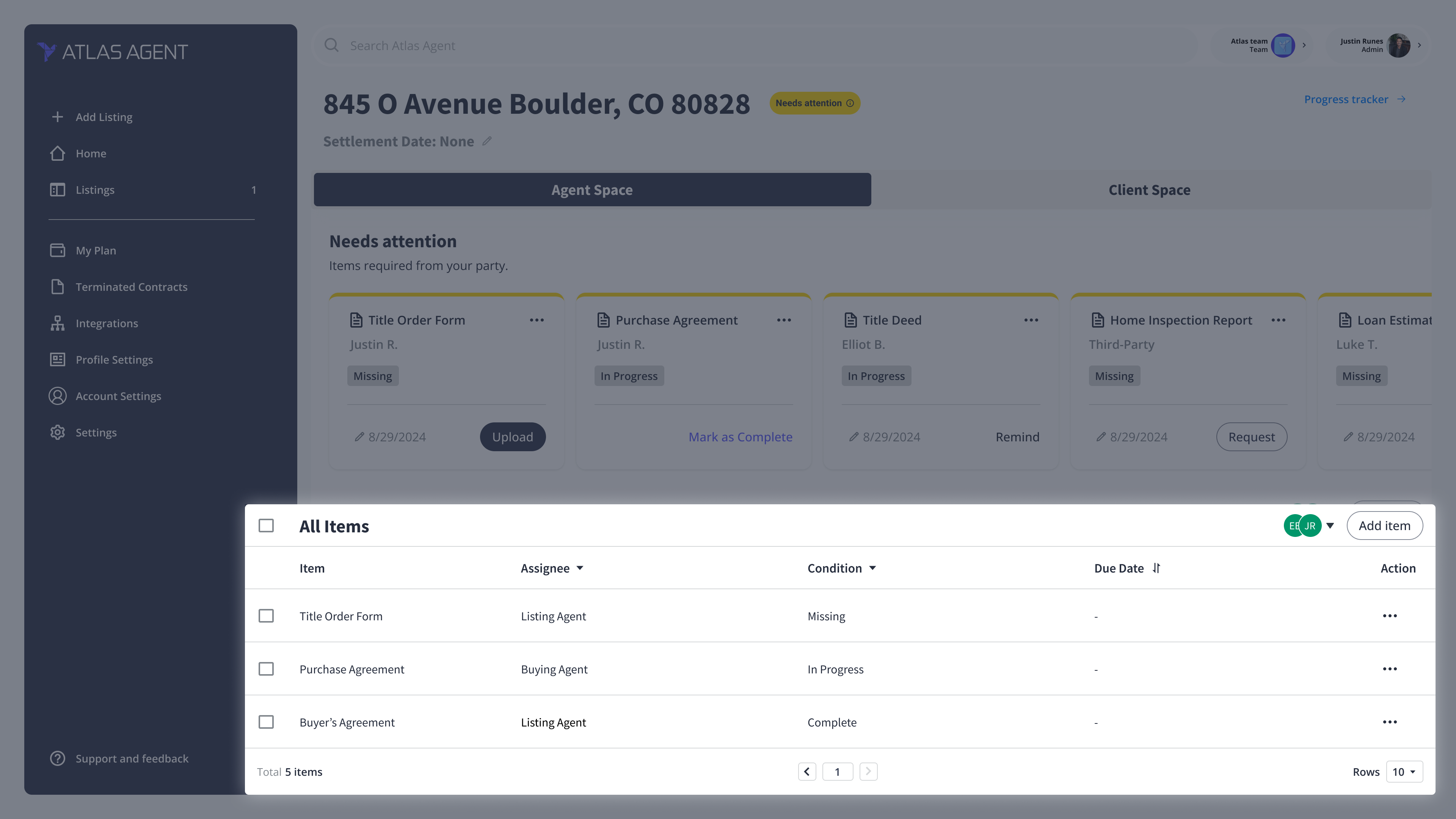
Listing captions
We want users to know where they are, so listing name goes first along with a "Needs Attention" tag and Settlement Date.
How do we scale?
Dashboard cards
I organized the report listing page by to bringing important information to the top.
In the original design, the data associated with each other was stacked and center aligned, making it difficult to read. So I designed it to be readable from left-to-right
Measuring success and impact
User engagement and retention metrics
Since we've just launched in October 2024, we're looking at metrics that will help us measure how often agents are using our product and at what point they stop using it.
North Star Metric
I consider 3 document uploads a success. The first document is the buyer offer contract, which is mandatory. The second document is the first document they upload without the influence of formalities. The third upload shows that our platform is usable and intuitive for agents without obstructing the regular work flow.
What went wrong?
Oncoming pain points
More pain points came up the deeper we got into user interviews, but we stayed strong and used a list of Musts, Shoulds, Coulds, and Wont's. We made sure we P0 was being met and other important pain points were going to be addressed if we had bandwidth.
We were excited about a lot of ideas but we had to be realistic with what we could accomplish in launch.
What went well?
Consistent feedback and communication
Each week we had lots of meetings with constructive feedback from the team and that made it easy to make decisions about changes.
Problem defining: the problem existed before, but what changed was the UX team being able to point at something and saying hey, look, this is Chase. They have these needs because xyz. Having something tangible was critical in communication both internally and to potential clients/investors.
Did I improve as a designer?
Yes. Collaborating so frequently gave me so many fresh ideas and prevented me from blocking myself off from solutions. I got a lot of value out of working closely with developers and real estate agents (users). My appreciation for working with both users and developers alike has gone way up.
For next time
I want to test more whenever I can. More prototypes over mockups, there's more data from usability tests than presentations. I should use mockups and task flows for communicating ideas and use prototyping for solid data.
Next project
Camphor
Buying a home is overwhelming. I transformed dense listing data into a guided, easy-to-scan experience and incorporated their AI chatbot so buyers could dig deeper without feeling lost.